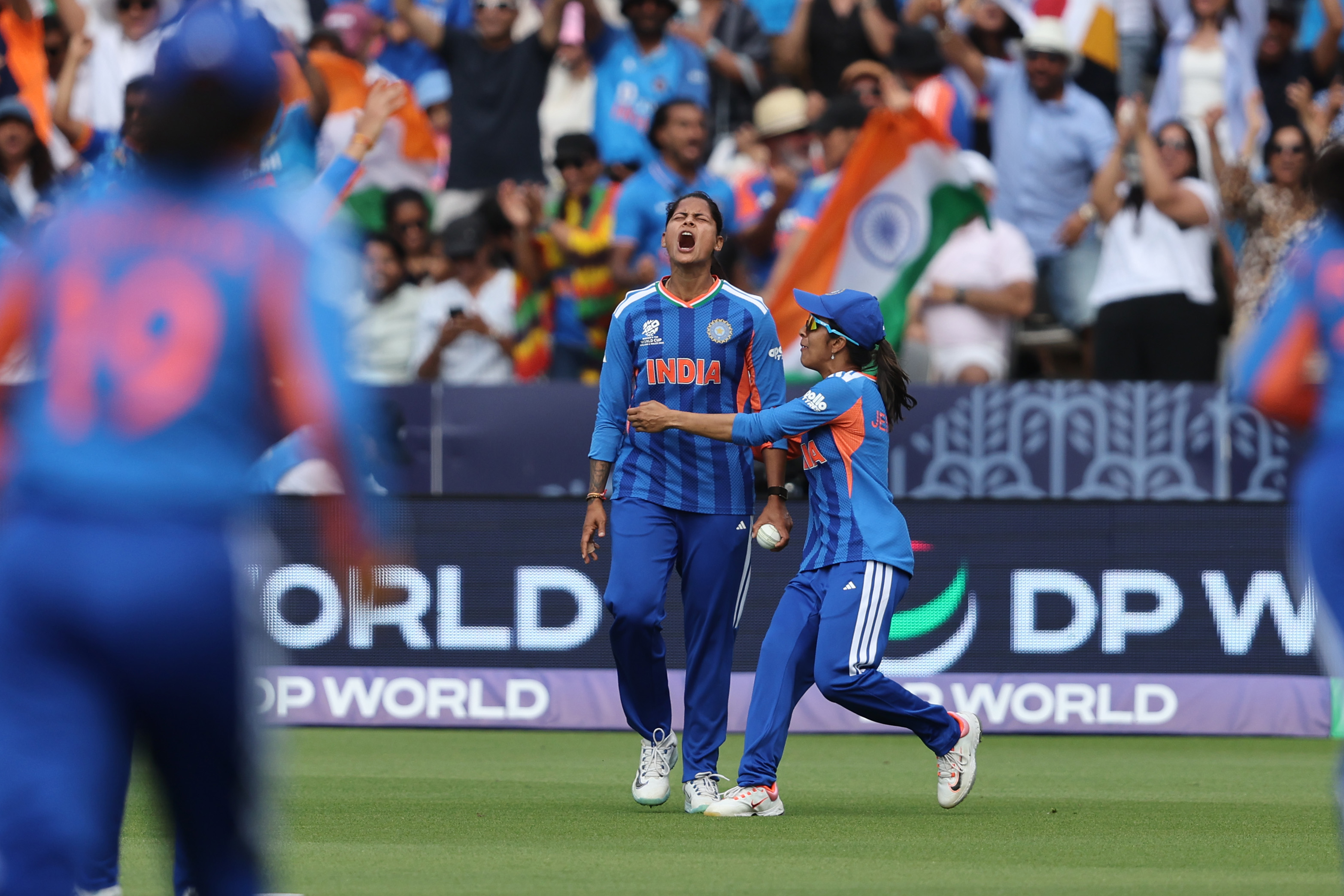
LONDON, ENGLAND: India were knocked out of the ongoing ICC Women’s T20 World Cup after a disheartening loss to Australia by six wickets at Lord’s on Sunday, June 28. This defeat has sent shockwaves across the nation and put captain Harmanpreet Kaur and her girls in the middle of an autopsy, as it were.
India, who won the ICC Women’s ODI World Cup in 2025, were one of the favourites to lift the T20 title as well, but it was not to be. They started the tournament well enough by beating arch-rivals Pakistan by 64 runs. India followed this with a comfortable 95-run victory over the Netherlands, and their supporters were buoyed.
However, the Women in Blue suffered their first setback in the Women’s T20 World Cup when they came up painfully short against South Africa at Old Trafford, tasting defeat for the first time by six wickets. A win against Bangladesh gave them the impetus they needed to make it through to the semifinals, but the defeat to Australia put paid to all their plans.
India came third in a group where the top two would qualify

The nature of the Women’s T20 World Cup, as designed, was such that only the top two teams from each five-member group would qualify for the semifinals. With Australia topping Group A, the second spot went to South Africa, who won four out of their five matches. India, despite having lost just twice in the group stages, had to return home.
While the design of the Women’s T20 World Cup forced India’s hand to a large extent (they would have qualified for the Super Six stage were it present), Harmanpreet and the girls must take accountability for their actions. The twin losses to eventual semifinalists Australia and South Africa hurt India and ultimately knocked them out of the biennial tournament.
Against the Aussies, three of India’s batters got into the thirties (Smriti Mandhana, Jemimah Rodrigues and Shafali Verma) but only Harmanpreet could convert her knock into a half-century (56). This half-century was, incidentally, the fastest by an Indian at the Women’s T20 World Cup. The 170 India put on, however, was not enough for an imperious Australian batting unit, which chased it down with one over to spare.
Renuka Singh Thakur conceded 41 runs against Australia

Ellyse Perry and Ashleigh Gardner’s half-centuries saved the day for Australia, but India were hurt by Radha Yadav’s ineffectiveness. The left-arm orthodox spinner bowled two overs and conceded 12 runs, which forced captain Harmanpreet to turn to Verma and ask her to bowl four overs instead. The leader of the bowling unit, Renuka Singh Thakur, too, came up short, conceding 41 in her four overs.
Earlier in the tournament, India had come up short with the bat against South Africa as well, putting up just 158-7 after winning the toss and opting to bat. Most Indian batters got starts but failed to convert them into big scores, with Verma’s 31 being the highest, followed by Deepti Sharma’s 29. South Africa, too, chased this down with almost an over to spare.
India’s fielding lapses at the Women’s T20 World Cup will not be forgotten

N. Shree Charani, the number one-ranked bowler in the world, was successful in picking three wickets in this outing, but received little support from the others. The iconic Deepti Sharma, the most renowned Indian bowler in the world, was torn into pieces by the South Africans, conceding 44 in her quota of four overs and returning with no wickets.
And finally, how can fans forget the fielding lapses? India dropped a whopping ten catches in this edition of the Women’s T20 World Cup, and to beat the elite at their own game, this is simply not good enough. Marizanne Kapp was notably put down twice against South Africa, while India also dropped five against minnows Bangladesh.
Going back to the drawing board is a painful reality for India after they bowed out of the Women’s T20 World Cup for the tenth time without winning it. Harmanpreet and the rest of the team have to prepare better for the future, most notably in fielding. Imbibing the power game remains a necessity too, but without good fielding, India will retain their tag of being ‘also-ran’.
ALSO READ – What were Gautam Gambhir and Shreyas Iyer’s roles in India’s 0-2 whitewash by Ireland?
If you liked this article, consider subscribing to our website to stay in touch with the latest updates in sports. You can also follow the India Sports Tribune on X and Instagram. We would love to talk to you!






Leave a Reply