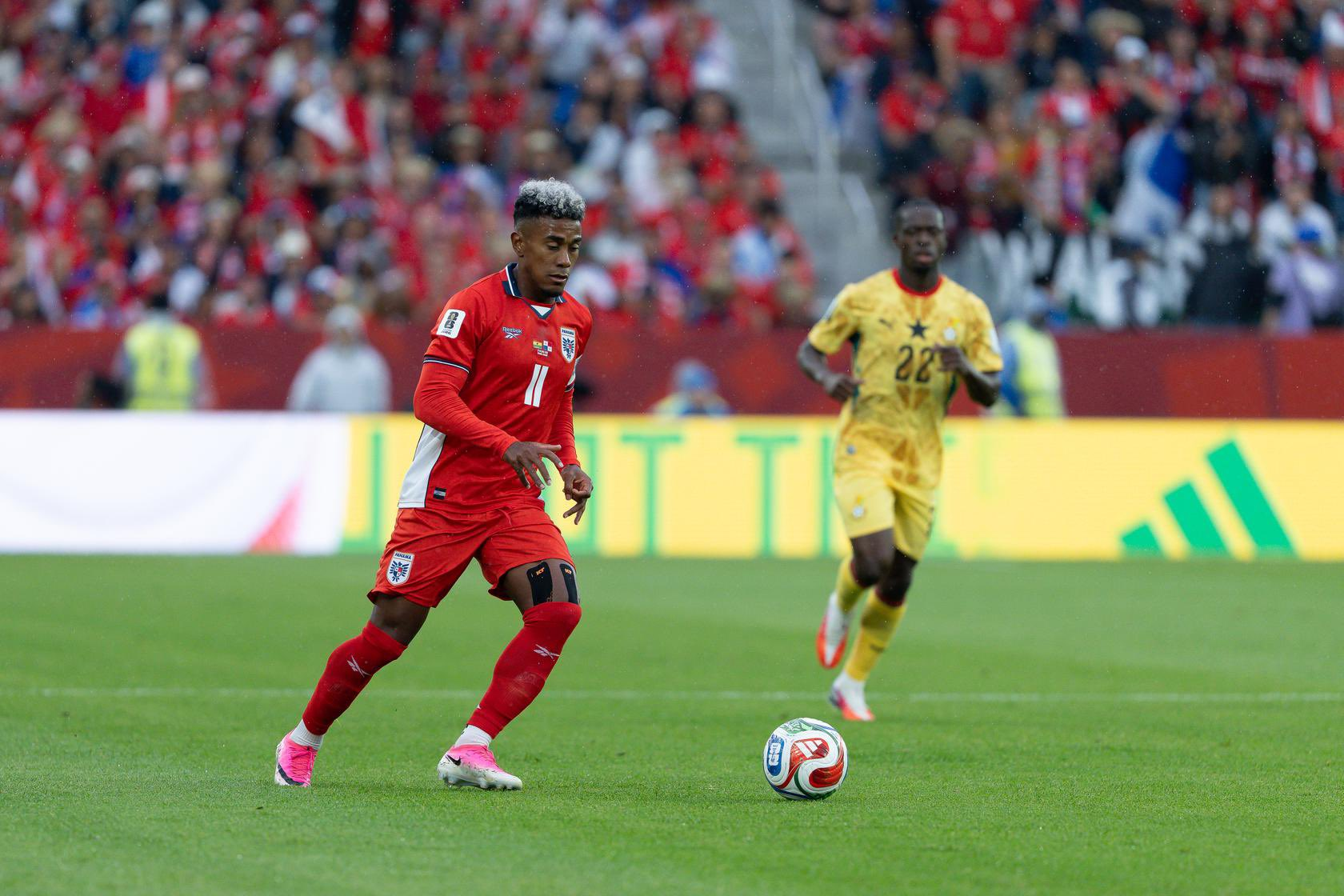
BENGALURU, INDIA: When the Indian football team step out onto the Sree Kanteerava Stadium in Bengaluru to face Panama on Friday, September 25, in the first of three friendlies against varied South American opponents, a lot more than pride will be at stake. History, often a deterrent to the magic of the present, will weigh heavily on coach Khalid Jamil’s mind, much to his dislike. Indian football, as a whole, will be at stake.
For Panama are no run-of-the-mill opponents who have faced India in the past and decimated their strengths; they come here on the back of a group stage exit in the 2026 FIFA World Cup, a platform that Indian football can only aspire towards. Los Canaleros will provide the hors d’oeuvres to a three-course meal that Indian football fans have been looking forward to for months, and they are bound to leave a residual aftertaste.
Under Thomas Christiansen – who has been at the helm since 2020 – Panama have developed into a powerhouse at CONCACAF, and are increasingly being taken seriously. While always a physical side, Panama’s core has now evolved into a unit that can shield the ball when in possession, use low defensive blocks to prevent counter-attacks, and then launch rapid attacking moves.

While the successive losses to Ghana, Croatia and England at the 2026 FIFA World Cup hurt Los Canaleros, it did not, by any means, stem their true potential. This was their first World Cup under Christiansen (having played under Hernán Darío Gómez in 2018), and it was largely built on their willingness to be fluid in defensive zones, with a lucid emphasis on shifting possession quickly.
The loss to Ghana came as a surprise because Los Canaleros were, by far, the better attacking side on display. Having kept 62% of the ball and taken 11 shots while making 19 touches in the opponents’ box, Christiansen’s men did everything right but put the finishing touches on it. Even their passing accuracy of 86% was better than that of Ghana’s.
However, an early defeat in a tournament as daunting as the FIFA World Cup affected Panama’s morale negatively, and they were unable to recreate this performance against Croatia and England, taking a combined three shots on target in both. Their ability to find the right pass under a vigorously gegenpressing English side was severely tested, and Panama wilted – they created no big chances at all.
Can the Indian football team overcome Panama with aerial balls?
The Indian football team will increase their chances of surviving this Panamanian assault, physically at least, by shielding the ball carefully. Jamil does not have to do away with the idea of playing in the air, as Panama’s worrisome success rate of 19% in winning aerial duels against Ghana shows. While the number improved significantly against Croatia, it shrunk significantly to 39% against the Three Lions.
Despite being known for their physicality, Panama can, at least momentarily, lose composure in midfield. Christiansen started with a 3-4-3 formation against Ghana, which evolved into a more inspiring 3-2-5 in attack. Against Croatia, he resorted to a timid-looking 5-4-1, but to little avail. Strangely enough, he stuck to his guns against England, whose creativity marred his defensive lines and discipline.
The Indian football team’s strengths lie in keeping possession and drawing their opponents’ midfielders out of position. However, this strategy can backfire if Los Canaleros minimise the avenues for Indian midfielders to pass the ball under duress. A quick counter-attack launched by the quick-footed Azarias Londono will be hard for the Blue Tigers to contain. Ismael Diaz, left out by the visitors, could have been a threat, but Cristian Martinez is no weakling on the right flank.

The best way for the Indian football team to contain Panama, therefore, lies in losing the ball as little as possible. While admittedly a daunting task against a side whose entire personality is based on pressing vertically with a physical presence (Christiansen must have imbued some of his Barcelonian roots), the Blue Tigers can use the aerial path when cornered by their vaunted opponents.
Los Canaleros’ attacking tactics are not opaque: once the low block succeeds and they regain the ball, their wide midfielders (assuming they are playing in 3-4-3) are asked to drive forward. Things will heat up for the Indian football team if Christiansen plays with two fullbacks in his back three and pushes them into the final third when in possession, asking his central midfielders to provide defensive cover. Midfielder Adalberto Carrasquilla will lie at the heart of such operations.
When these fullbacks overlap on the flanks, with the two wide-lying midfielders poised to drive and three full-fledged attackers waiting in the box, the Indian football team will have to deal with seven blood-hungry Panamanians at once. Thus, the secret to breaking the Panama attack lies in protecting the ball and passing it with precision, but since it’s unavoidable, India have to be smart about their defensive shape. Isolating striker Tomas Rodriguez, famous for his control, will go a long way in cutting off their visitors’ supply chain.
India’s formation will dictate the defensive shape they hold against Panama
To be sure, Jamil cannot hope to imitate his counterpart and play with two wingers; even a 4-2-3-1 formation will be a luxury for the Blue Tigers in the face of such distress. Starting with a 4-4-2 or a 5-4-1 with a hefty midfield combination consisting of Apuia and Anirudh Thapa will do, but Ricky Shabong and Macarton Nickson, relatively new to the setup, have to be trained in this philosophy.
Similarly, Sahal Abdul Samad and Farukh Chowdhary will have to essay the dual roles of controlling the ball before having the vision to pick the right pass in the final third. Playing through the lines will be last on the list of India’s plans, as Los Canaleros’ fluid formations are expected to nullify such attempts. They displayed this with precision in their final World Cup Qualifier against El Salvador.
In an enterprising 3-0 victory, Christiansen started with a 3-4-2-1 formation, with the explicit idea of pushing his attacking midfielders, Diaz and Londono, into the final third when in possession. Just as swiftly, the duo assisted their four-man midfield, from which the two fullbacks were just as often asked to drop deep and assist their three central defenders during transitional phases of possession.

Just a few days before their morale-boosting victory over El Salvador, Panama had beaten Guatemala 3-2, where Christiansen implemented a 4-2-3-1 setup. This was equally fluid, and had the desired effect: despite keeping just 38% of the ball, Panama launched counter-attack after counter-attack, scoring three goals while making just nine touches in their opponents’ box!
Jamil, therefore, cannot take Panama at their word, for they betray their formations faster than a politician being tried for defection. With the Indian football team seen as terribly modest opponents for a nation ranked 44th by FIFA, Christiansen will not risk his regulars, choosing instead to view this as an audition for youngsters whom he can plug for the CONCACAF Nations League later this year.
Boasting a midfield engine that can hold its own both with and without the ball, Panama are expected to lord it over the Indian football team. Add to this their flexibility in structure and a widened attacking base to shift opponents onto the back foot, and it is easy to see why Los Canaleros have been to the World Cup twice. None of this should faze Jamil, however, for India are equally capable of surprising their visitors. All they need to do is not lose the ball.
YOU MAY ALSO LIKE – Khalid Jamil and AIFF must be lauded for visionary Indian football selection
Cover image courtesy: X/fepafut
If you liked this article, you can consider subscribing to our website to stay in touch with the latest updates in sports. You can also follow India Sports Tribune on X, Instagram and YouTube. We would love to talk to you!




Leave a Reply