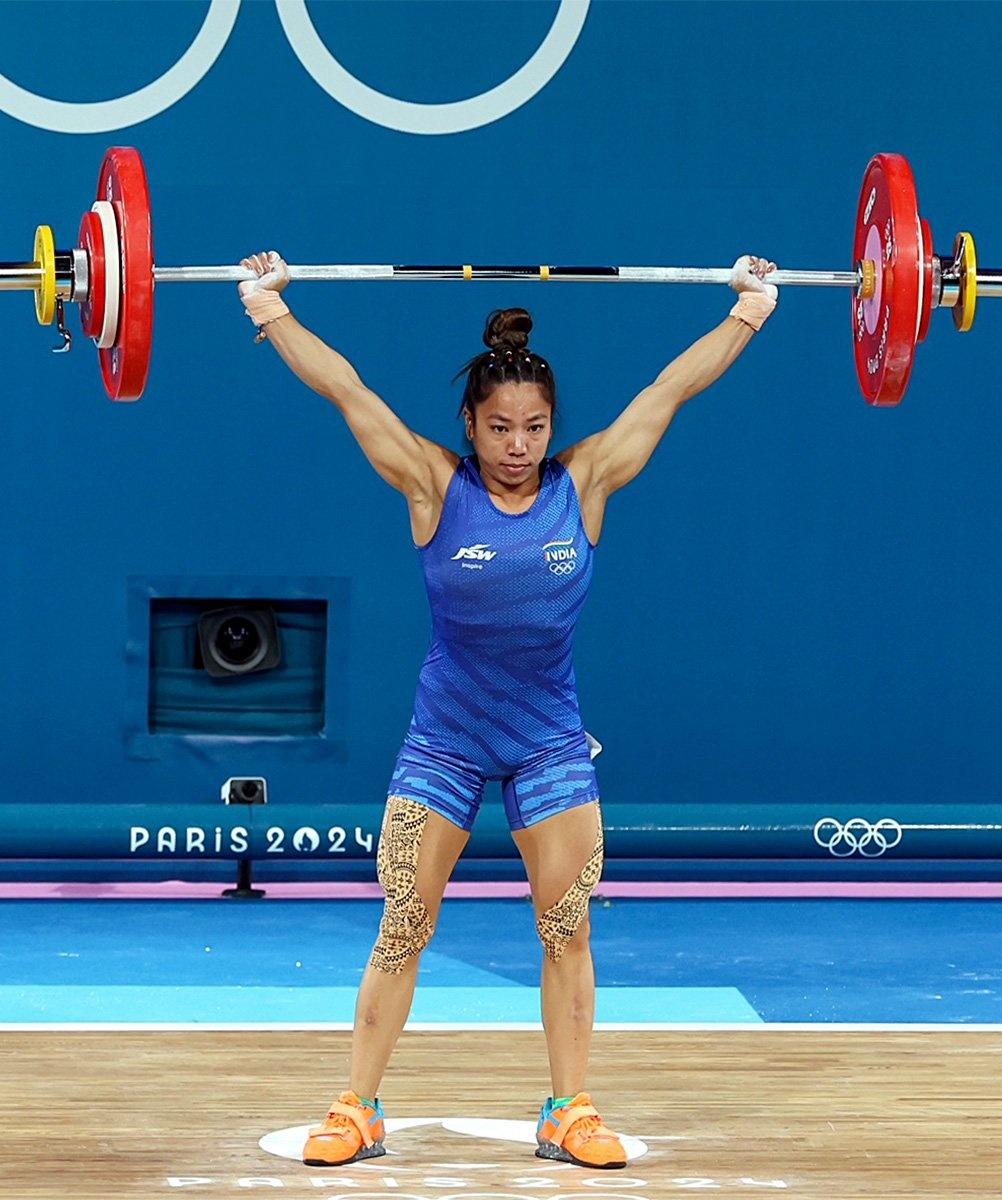
NAGOYA, JAPAN: Women are no longer on the margins of India’s sporting story in the Asian Games. They are increasingly becoming central to it. At the 2022 Asian Games in Hangzhou, India finished fourth with its best-ever performance. Its contingent was almost gender-balanced, with 328 women and 333 men.
Women’s events produced 45 of India’s revised total of 106 medals, including nine golds. Women also contributed to several mixed-event medals. Yet the comparison with Asia’s leading sporting nations reveals the distance still to travel. Women’s events delivered 204 medals for China, including 108 golds; 89 medals for Japan, including 22 golds; and 75 medals for South Korea, including 13 golds.
What do China and Japan do differently for success in the Asian Games?
What do China and Japan do differently? China’s women won medals across swimming, diving, athletics, shooting, rowing, canoeing, gymnastics, table tennis, combat sports and several team events. Swimmer Zhang Yufei’s six gold medals were exceptional, but China’s dominance did not depend upon her.
She was the most visible expression of a much deeper system. And Japan offers a different but equally valuable comparison. Its women won 89 medals across sports including cycling, swimming, wrestling, judo, football, gymnastics, skateboarding, softball and sport climbing. These numbers establish an important distinction.
India has moved substantially towards parity in participation, but participation parity is not the same as podium parity. Indian women were successful across shooting, athletics, archery, boxing, cricket, kabaddi and hockey.
Performances by the likes of Jyothi Surekha Vennam, Parul Chaudhary and Sift Kaur Samra also demonstrated that India possesses genuine world-class ability. However, our medal expectations remain concentrated around a few sports and a relatively small group of exceptional athletes.
India must invest in depth

Contrastingly, China and Japan do not simply produce more stars; they produce more medal-ready athletes behind every star. Their advantage lies in depth, continuity and the ability to compete across a much wider portfolio of sports. China’s system identifies talent early and connects it to provincial and national high-performance programmes.
Japan creates continuity through schools, universities, federations, clubs and corporate teams. Their models differ, but both provide an athlete with a visible pathway from participation to elite competition. India’s system remains substantially fragmented across schools, states, federations, government programmes, private academies, foundations and sponsors.
Some parts work extremely well, but a female athlete’s progress can still depend excessively on geography, her family support and financial capacity and finally, whether her talent is identified at the right moment. This external gap is compounded by the internal contests faced by most women athletes.
Many girls enter sport but leave during adolescence
Many girls aiming to win Asian Games medals enter sport but leave during adolescence because of unsafe and inadequate facilities, social and schooling expectations and, most importantly, the absence of a credible professional future. Those who decide to continue often encounter uneven access to specialised coaching.
This is apart from challenges such as proper nutrition, international exposure, injury management, and mental health support. Female-specific matters like menstrual health & hormonal changes and maternity also need to be considered. These cannot remain uncomfortable conversations; they must become a part of professional high-performance planning.
Evidently, there is huge potential to build India’s roadmap for the Asian Games considering the gaps across the aforementioned aspects. The plan can be around three key outcomes: participation, preparation and podium conversion. Participation must focus on retaining girls in sport, particularly through adolescence and social concerns.
Preparation must provide every elite athlete with an integrated plan

Preparation must provide every elite athlete (especially those competing in the Asian Games) with an integrated plan covering coaching, competition, nutrition, sports science, mental conditioning, safety and financial support. And finally, we must attempt to develop, in India, sport-by-sport podium strategies. Shooting, archery, athletics, boxing and wrestling require deeper benches with multiple medal-capable athletes in each priority event.
Team sports require regular leagues and international competition. In medal-rich areas of the Asian Games where India remains weak, particularly swimming, cycling, gymnastics, rowing and canoeing, we need long-term investment beginning well before the elite level.
The podium preparation and conversion must be measured sport by sport, tracking how many athletes progress from national competition to Asian Games finals, from finals to medals, and from medals to gold and Olympic competitiveness.
And almost certainly, if this three-pronged investment method is tried, where the brands, leagues and media platforms can play a mitigated and specific strategic and financial role, we can secure better visibility and enduring investments in athlete narratives, especially in the Asian Games.
What can be the next big sporting breakthrough for India?
The next Indian sporting breakthrough will not come merely from sending more women to the Asian Games. India is already close to representation parity. It will come from ensuring that our women arrive with the same depth of preparation, institutional confidence and economic security as the best competitors in Asia.
For too long, the stories of Indian sportswomen have been narrated primarily as stories of courage: women who fought families and systems, deep-rooted financial hardship and social convention before fighting their opponents. Of course, their courage must always be honoured. But courage cannot remain a substitute for infrastructure.
The real transformation will occur when Indian women, especially Asian Games medal hopefuls, no longer have to succeed despite the system, but are enabled to do so because of it. That is how participation will become preparation, and preparation can become podiums, and isolated excellence by each of our girls becomes sustained national strength and many more podium positions.

Darshana Bhalla is the founder and MD of D’Artist Talent Ventures. She is an experienced voice at the intersection of sports, talent and brand partnerships.
YOU MAY ALSO LIKE – 2026 Asian Games: How shooter Niraj Kumar used YouTube videos to become a medal hopeful
Cover image courtesy: Kiren Rijiju
If you liked this article, you can consider subscribing to our website to stay in touch with the latest updates in sports. You can also follow India Sports Tribune on X, Instagram and YouTube. We would love to talk to you!



Leave a Reply