
BENGALURU, INDIA: The Panama camp bore the look of a funeral, with the cortege of their pride and self-respect in tow, when the full-time whistle blew at the Sree Kanteerava Stadium in Bengaluru on Friday, September 25.
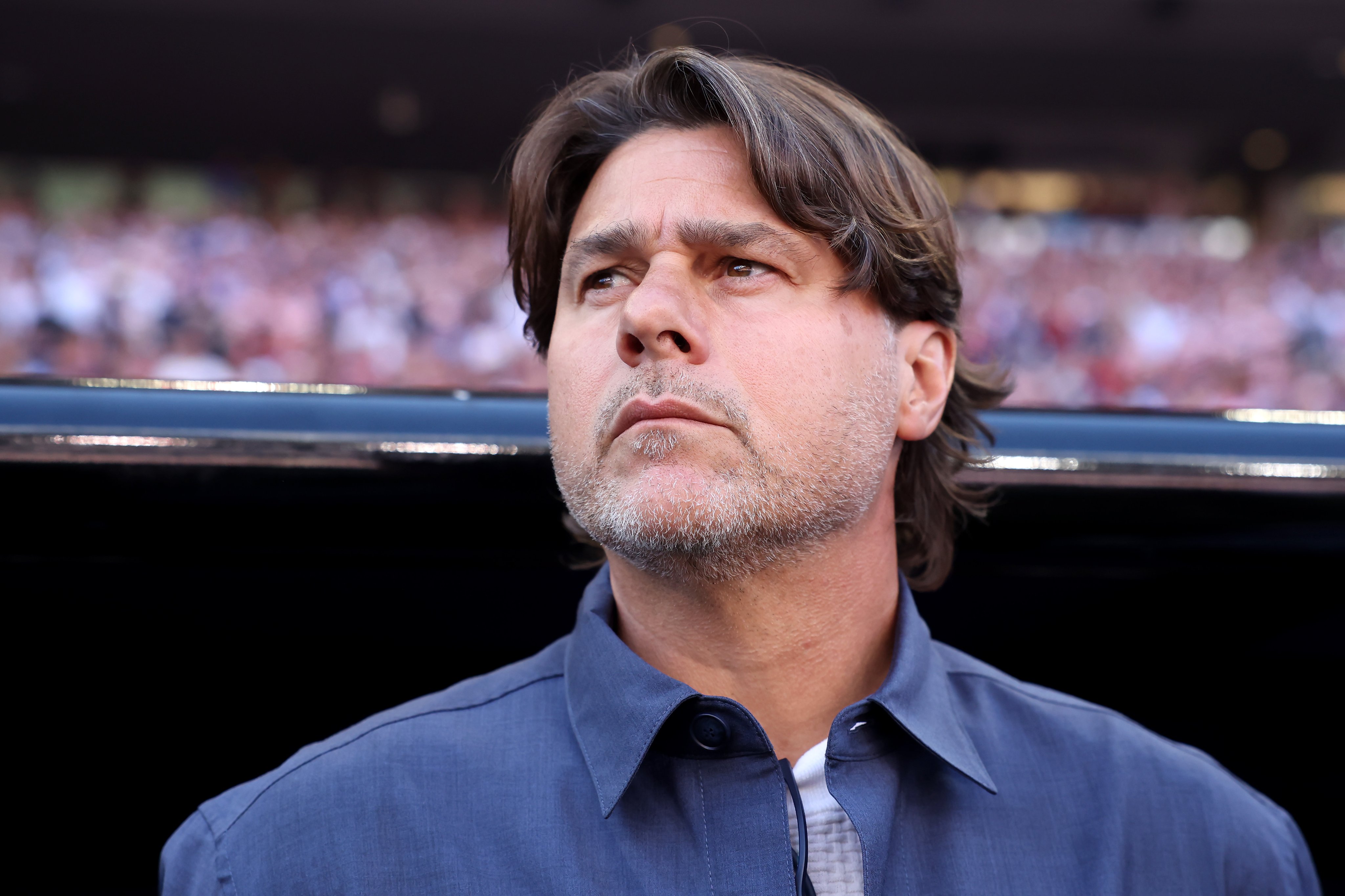
Goalkeeper Marcos de Leon was seen sinking to his knees and midfielder Adalberto Carrasquilla was looking shiftily over his shoulders, while coach Thomas Christiansen looked up to the skies to seek vain words of comfort.

The mood in the Panama camp was only natural: not in their wildest dreams had they imagined to draw 1-1 with India, a side ranked nearly 100 spots below them in the FIFA rankings. The disbelief in Los Canaleros’ dressing room was palpable.
The atmosphere on the other end of the pitch could not have been more different: the Indian football players too were on their knees, albeit in thanks to a God many of them had stopped believing in, and in gratitude to their loyal supporters.


The only consolation for Panama from this draw was the fact that they rarely, if ever, let their first-team starters take to the pitch, and it was only when they were a goal down that Christiansen brought stars Carlos Harvey and Carrasquilla on.
The visitors also handed debuts to five players, signalling a quiet shift in their resolution to build a side capable of competing on level terms with others in the CONCACAF Nations League later this year.
The Indian football team dominated Panama
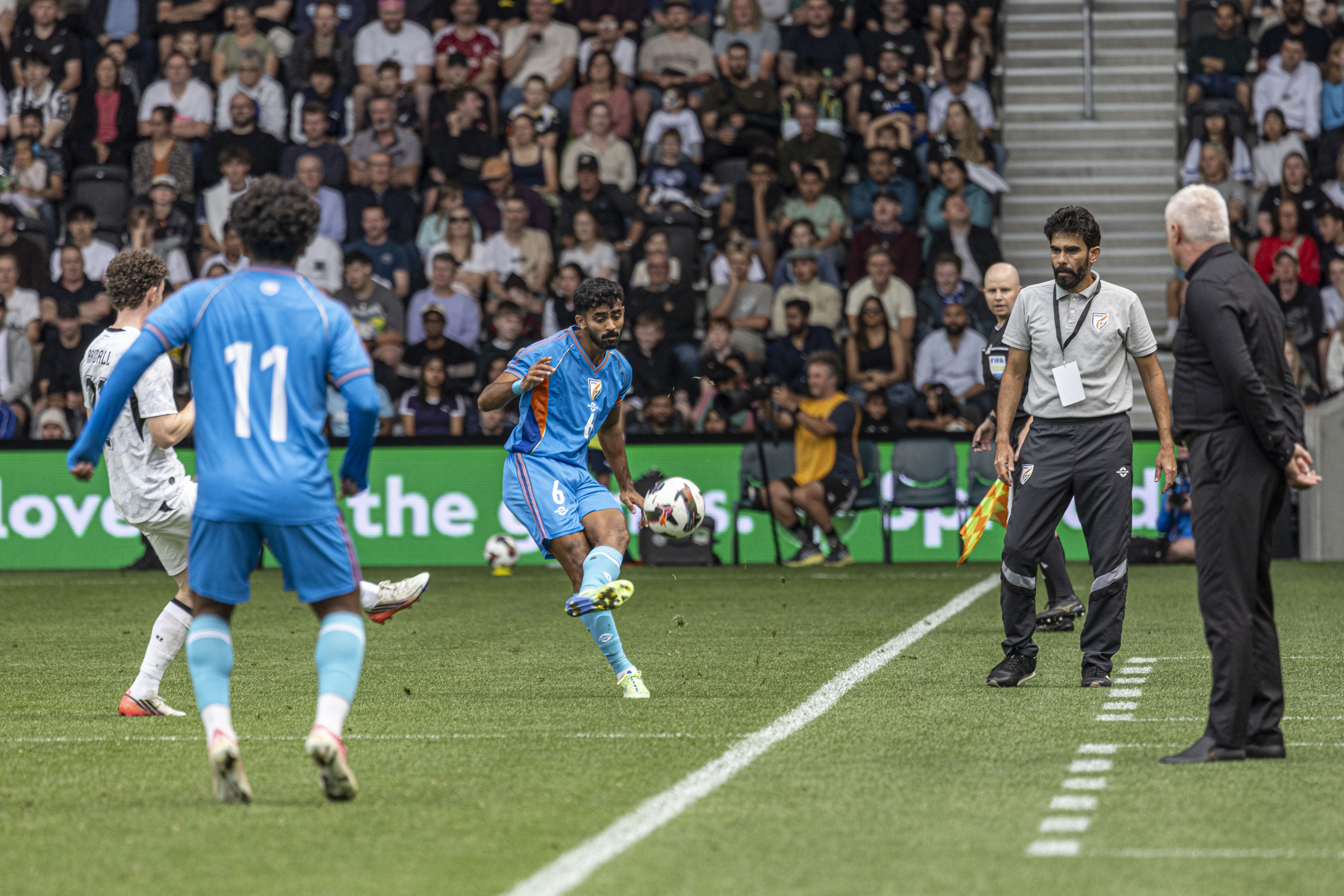
The Indian football team dominated proceedings for most of the game, which speaks volumes about the strong defensive shape they maintained when out of possession. Coach Khalid Jamil’s quintessential 4-4-2 formation was built on a low vertical press.
While this zonal marking sub-style helped India retain their shape, it also led to the latter equalising in the 68th minute. Omar Valencia’s goal was a strike for the ages by any standards, but a high press could surely have prevented the pre-assist from Azarias Londono and the assist from Eduardo Anderson.
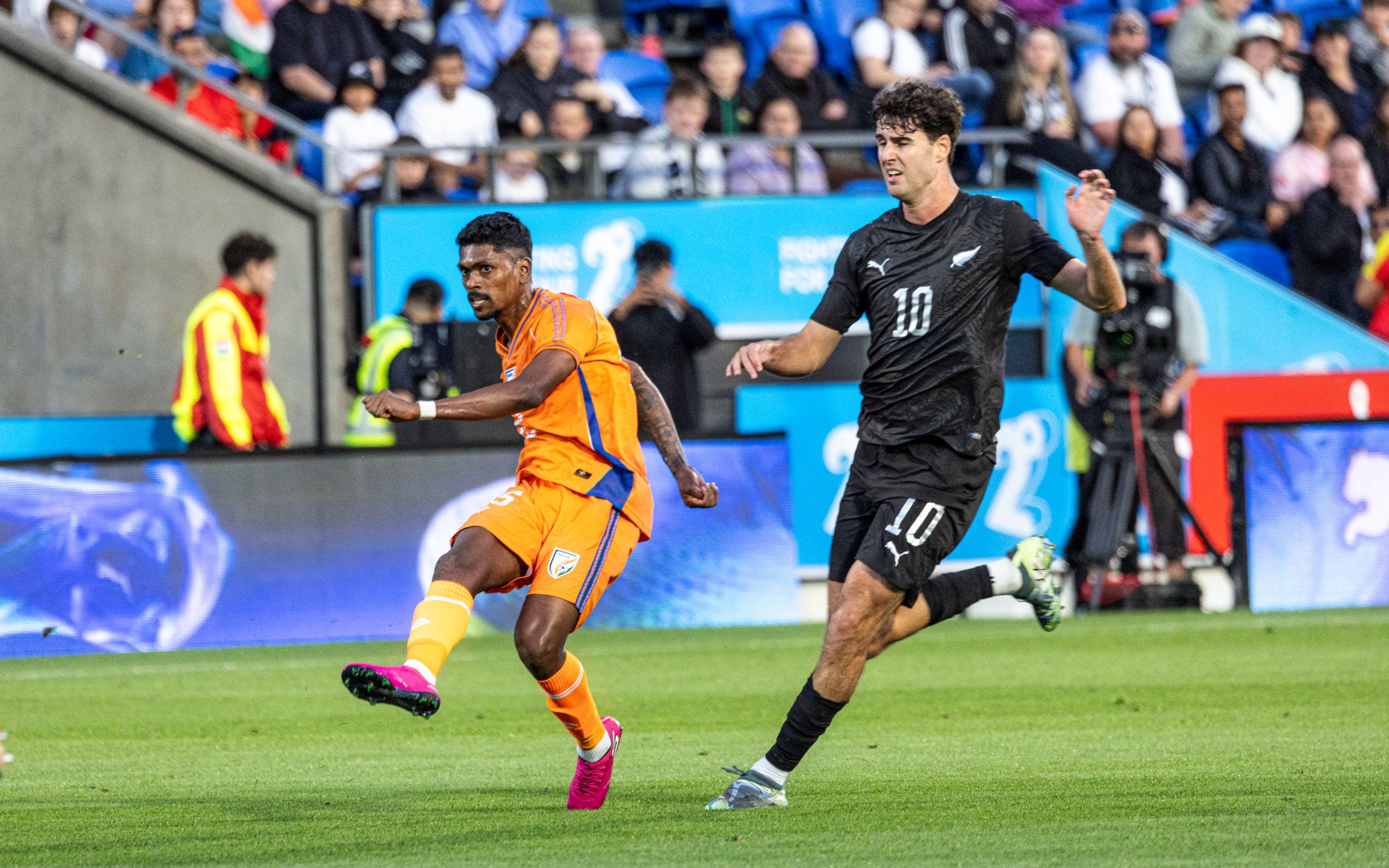
The Indian football team relied heavily on their left wing, and eventually it was from there that they managed to breach the Panamanian defence. For much of the first half, similar tactics had been tried and failed, with eventual goalscorer Ryan Williams even placing one wide of the mark.
Following the drinks break, Vikram Partap Singh’s involvement on the right wing increased significantly, with coach Jamil and his assistant Mahesh Gawali appearing to have given up on the left side of the final third.
But just as such shifting of play gathered steam, Akash Mishra surprised the Kanteerava – and most of all himself – by sending a sumptuous lobbed pass with his right foot, bypassing Panama’s high backline and finding Williams.
The latter, who relinquished his Australian citizenship to ply his trade for the Indian football team, had both time and space in his favour, as his partner-in-crime Manvir Singh had already drawn the other Panamanians off their lines.
Such timely runs were the hallmark of Williams’ gameplay on Friday, for he was often isolated by Panama’s Anderson and Joseph Jones. The visiting side’s pivot, Victor Griffith, too, had acted occasionally as their third centre-back and closed in on Williams’ positioning.
Panama used fluid tactics against India

This fluid tactic of Los Canaleros, which involved driving seven attackers into the final third when in possession (two fullbacks, four midfielders and one target man), appeared harsh when met with the negations of Anwar Ali and Bijoy Varghese.
Griffith drove the game forward by plonking himself in the centre of the park and allowing his fullbacks to push into the final third. The two central defenders and Griffith then spread themselves evenly and continued isolating Williams to avert an Indian counter-attack.
Apuia and Ricky Shabong’s role in midfield gradually gained credence, with the former shielding Ali and Varghese when without the ball, and the latter marking his opposite number – albeit with limited success – but retaining their shape nonetheless.
So encapsulating was the midfield duo’s compact nature with the ball, and their fiercely protective attitude when without it, that it allowed Mishra to operate akin to a left-winger, with his colleague on the right wing, Abhishek Singh, inverting himself.
Such tactics have rarely been seen from the Indian football team of late, except in the Manolo Marquez years when they started using crosses and lobbed passes almost as if they were a hobby. While aerial balls have declined under Jamil, the intent to change their mode of attack has become ingrained in India’s DNA.
On Friday, Varghese’s long throws started enough conversations in coffee shops on Indiranagar, while causing more than a flutter in Panama goalkeeper de Leon’s heart. Jones and Anderson were rather relieved that India did not get too many opportunities to test the strength of Varghese’s upper body.
The biggest compliment the Indian football team can get from this encounter is by virtue of the discipline they showed in managing Panama’s formation, which was more slippery than the hilsa India are sure to taste in their next port-of-call, Calcutta.
While Griffith donned the roles of creator-enforcer-destroyer in a stadium not far from Trinity Circle, it was not unusual for Indian football fans to see their opponents play with a 2-1-7 in possession, and a 4-1-2-3 without it. Apuia and Shabong assumed cultish status by curbing Panama’s desire to make runs behind their lines.
The result was so close to unthinkable for Indian football that even Jamil, a dour and humourless man on most days, spoke of it as one of their best-ever performances. Afterwards, one could almost decipher the flicker of a smile in a man famous for not knowing how to.
YOU MAY ALSO LIKE – India vs Panama: Stunned and breathless in Indian football’s glorious night in Bengaluru
Cover image courtesy: India Sports Tribune/ Kalyan Sri
If you liked this article, you can consider subscribing to our website to stay in touch with the latest updates in sports. You can also follow India Sports Tribune on X, Instagram and YouTube. We would love to talk to you!



Leave a Reply