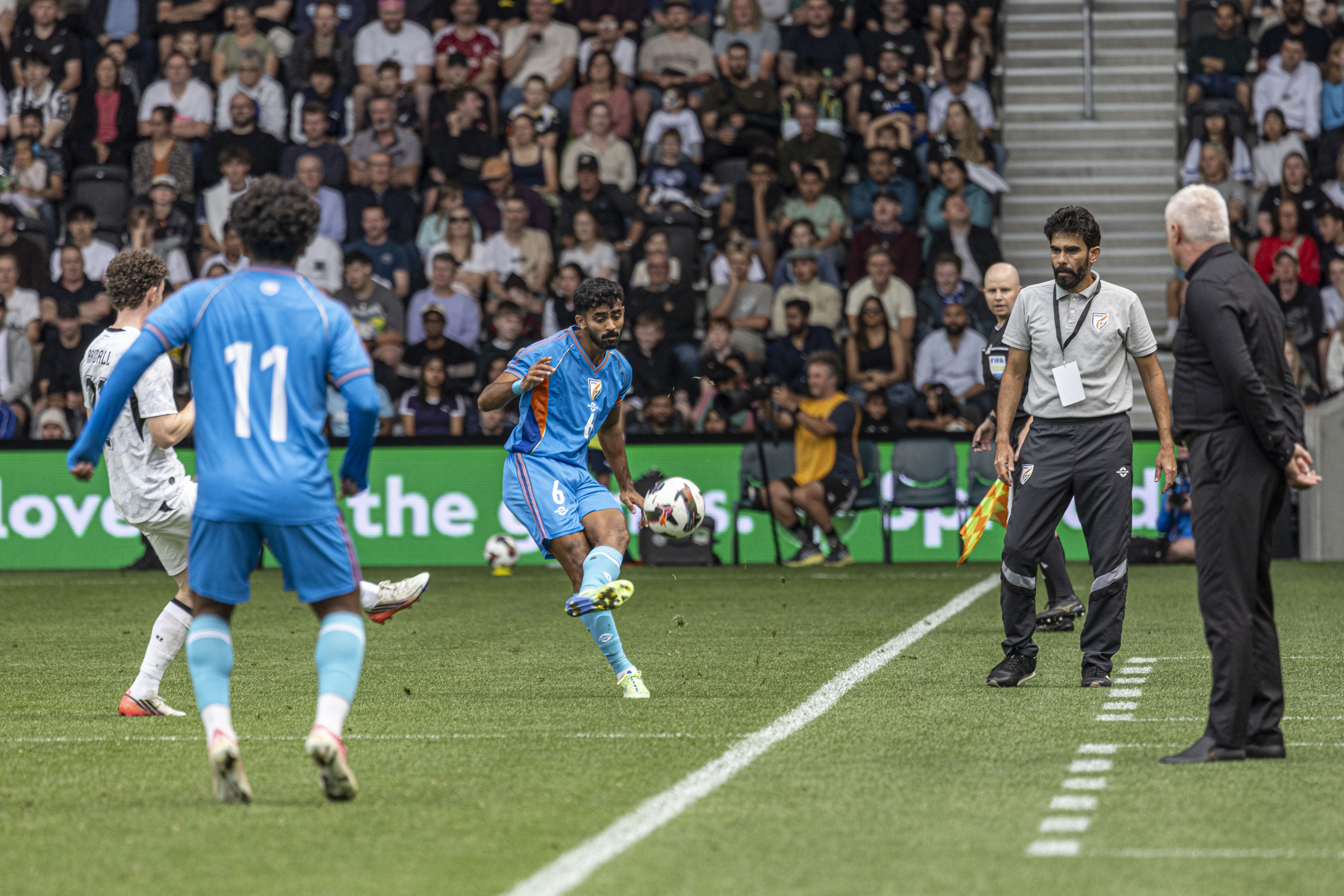
CHRISTCHURCH, NEW ZEALAND: The adverse results for the visitors in the recent New Zealand vs India series in the FIFA window have a lot of lessons trapped in the awnings. The Indians were thoroughly dominated across both games, conceding eight goals and scoring none.
If the Blue Tigers ever needed a wake-up call to the physical and tactical realities of international football, this was it. India were second-best throughout the series; while they allowed the All Whites to barrage their defence in the first game in Auckland, they relinquished control in midfield in the second in Christchurch.

Head coach Khalid Jamil’s unusual – if not exactly baffling – excuses of a seven-hour time difference and insufficient training sessions notwithstanding, the New Zealand vs India series will help India reassess their priorities. Perhaps the first area to take action is by going back to a cohesive, possession-based style.
The New Zealand vs India series gave India a couple of important lessons

The tactic of using long balls from defence to attack – which first rose in prominence in the 1920s and 1930s when the game was being developed in England – did not serve the Blue Tigers well in the New Zealand vs India series.

In both games against New Zealand, India were overpowered in midfield, which thoroughly rattled their long-ball strategy. While such a tactic can come in handy against teams that are not quick on the counter-attack, losing aerial balls makes defending one’s own position tough when competing with players with World Cup experience.
Another major lesson that the visitors will bring home from the New Zealand vs India series is their painful lack of physicality. Apuia’s absence due to an injury hampered Jamil’s plans in midfield, but that was surely no excuse for the Indians to be second-best, physically and technically, in all areas of the pitch.
Indian football’s growth is directly tied to that of the ISL

The All Whites rarely had to fight for the ball – they were handed it on a plate – across both games. The growth of the Indian Super League has a major role to play in the development of physicality amongst Indian players.
If the ISL – with the help of corporate backing – grows on par with other top Asian leagues, the Indian football team, too, will reap its benefits. Adding more matches to the calendar while tinkering with a reserve league, which will hand more game time to Indian youth who spend time on the benches, will aid the ISL.
Tussling against a control-heavy unit was never going to be easy, but the way the Blue Tigers surrendered in the New Zealand vs India series left a lot to be desired. The numbers do India no justice: they have now conceded 19 goals in their last five international friendlies (all against World Cup-playing opponents) and scored just two.
- YOU MAY ALSO LIKE – IWL 2026-27 season preview, list of players, where to watch and more
Cover image courtesy: AIFF
If you liked this article, consider subscribing to our website to stay in touch with the latest updates in sports. You can also follow the India Sports Tribune on X, Instagram, YouTube, LinkedIn and Facebook. We would love to talk to you!





Leave a Reply