
TASHKENT, UZBEKISTAN: The Indian football team’s campaign in the AFC U20 Asian Cup Qualifiers was a study in contrasting performances. A disciplined 1-0 win over Syria was followed by a difficult 4-0 defeat to Uzbekistan, before the Blue Colts responded with a commanding 3-0 victory over Bangladesh. Across these games, India showed their ability to defend under pressure, but also revealed the importance of maintaining possession and finding solutions against teams that can dominate the ball in midfield.
India 1-0 Syria: Patience under pressure
India spent large periods without the ball against Syria in the Asian Cup Qualifiers and were forced into a deep defensive block, with the midfield and defence staying compact to limit space between the lines. Rather than pressing recklessly, the Blue Colts prioritised their defensive shape and looked for opportunities to attack when Syria committed players forward. Their attacking threat was limited, but the Indian football team remained composed and eventually found the decisive opening late in the game.

A triple substitution around the 79th minute added fresh energy, and Mohammed Arbash immediately provided a direct outlet. In the 86th minute, Arbash reacted to Shami Singamayum’s ball into space, reached the box and cut it back for the latter to finish. India then managed the closing stages without allowing Syria to find a response, making their defensive organisation the foundation of a crucial victory.
India 0-4 Uzbekistan: The midfield battle the Indian football team couldn’t win

The Uzbekistan game exposed a different side of India’s tactical limitations in the Asian Cup Qualifiers. The hosts were able to control the tempo and repeatedly force India backwards, while the Blue Colts struggled to retain possession or progress the ball through midfield. That meant India’s defensive line faced sustained pressure, with Uzbekistan able to move the ball into dangerous areas rather than being forced into rushed attacks.

Ulugbek Maratov opened the scoring in the 29th minute before Kuvonchbek Abraev doubled the lead from a free-kick six minutes later. The Indian football team’s attempts to change the game through substitutions did not alter the pattern, and Uzbekistan continued finding spaces around and behind the Indian defensive structure.
Shorakhim Shorakhmedov made it 3-0 after an attack down the left ended with a pullback into the box, with Nurbek Sersenbaev completing the scoring in the 90th minute after getting behind the defence. The 0-4 scoreline ultimately reflected India’s difficulty in disrupting Uzbekistan’s control of the game.
India 3-0 Bangladesh: India find multiple routes to goal
India’s final game in the Asian Cup Qualifiers was their most tactically varied performance. The opening goal came directly from pressing, as Danny Meitei Laishram and Hateem Ali pressurised Bangladesh captain Md Abdul Riyad Fahim into losing possession. Hateem then carried the ball past two defenders before setting up Danny for the finish in the 25th minute.
India also threatened through set pieces, with a long throw creating the second goal: Rishikanta Meitei Laishram flicked the ball on for Vishal Yadav to produce a bicycle kick that landed into the back of the net. With their eastern neighbours forced to push forward after going 0-2 down, the Indian football team found space to attack, but did not lose their defensive organisation.
The third goal showcased their ability to combine in open play, as Yaipharemba Chingakham helped initiate the move before a series of passes opened up the Bangladesh defence and allowed Arbash to fire home with his left foot in the 79th minute. The three goals therefore came through three different attacking situations: pressing, a set piece and combination play.

Twenty years later, India are back in the AFC U20 Asian Cup
The 3-0 victory gave the Indian football team six points and a second-place finish in Group B behind Uzbekistan in the Asian Cup Qualifiers. This proved enough for the Blue Colts to qualify as one of the best runners-up across the qualifying groups. The Indian football team will now return to the AFC U20 Asian Cup (Men’s) for the first time since 2006, ending a two-decade absence from the continental competition.
The AFC U20 Asian Cup will provide India with opponents capable of applying the same kind of pressure Uzbekistan did, while also punishing mistakes more consistently. The qualifying campaign showed that India have a strong foundation when they stay compact and attack with purpose.
But their ability to progress with the ball and maintain control when pressed will be crucial at the next level. With qualification secured, the next phase is about seeing whether the Indian football team can turn the resilience that carried them through Tashkent into performances against Asia’s strongest U20 sides.
YOU MAY ALSO LIKE – Khalid Jamil and AIFF must be lauded for visionary Indian football selection
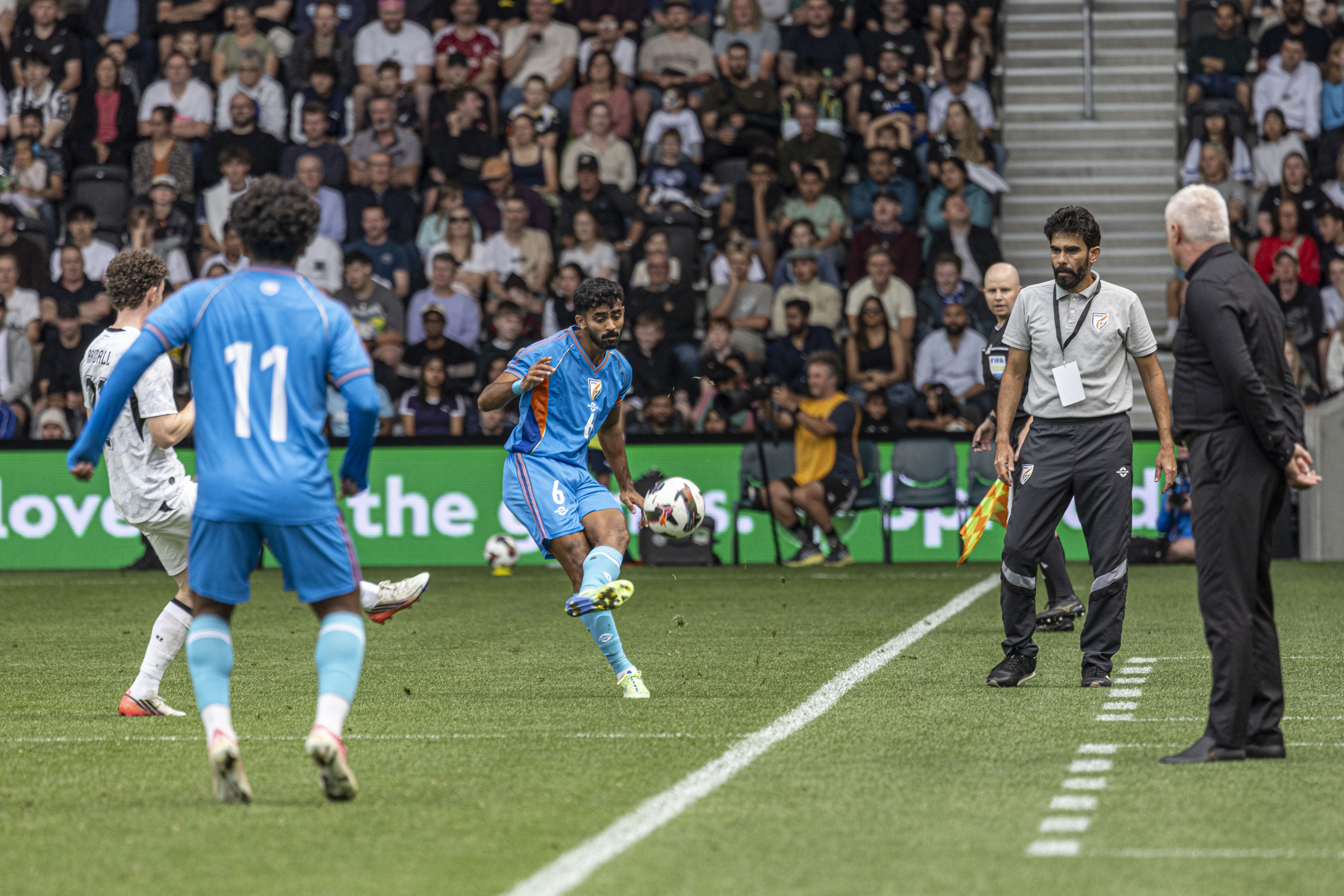
Cover image courtesy: X/IndianFootball
If you liked this article, you can consider subscribing to our website to stay in touch with the latest updates in sports. You can also follow India Sports Tribune on X, Instagram and YouTube. We would love to talk to you!





Leave a Reply