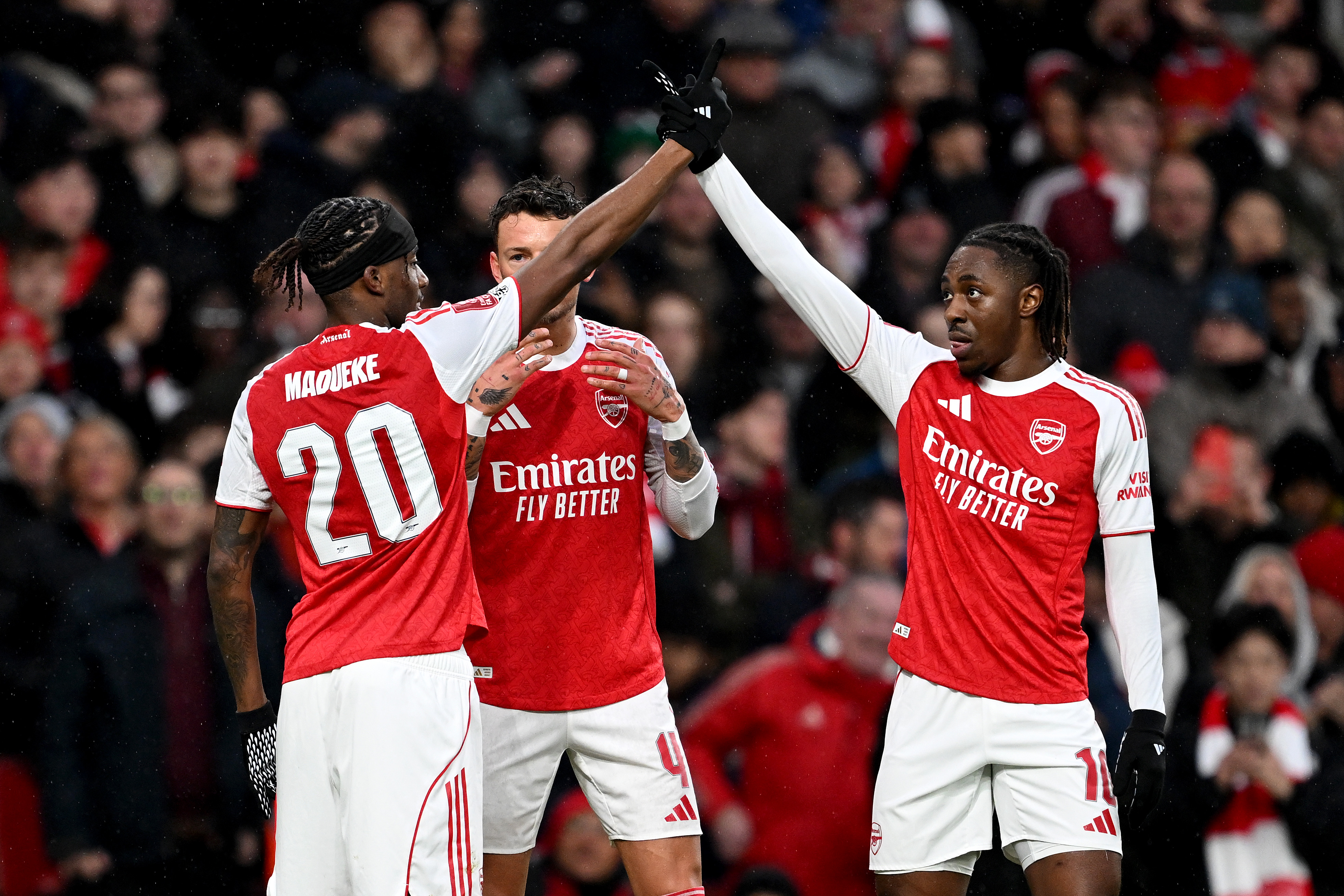
LONDON, ENGLAND: The Premier League table states a fact: Arsenal are first. But league tables are snapshots, not verdicts. They record accumulation, not authority. Position suggests dominance; structure determines champions.
In a title race measured by margins, underlying performance, and the sustained pressure of rivals within reach, leading in February is not proof of control; it is proof of proximity. Arsenal have built a lead. Whether they have built security remains unresolved.
The conditional nature of Arsenal’s lead
Arsenal’s advantage at the top appears straightforward: 61 points from 28 matches, with 18 wins, 7 draws, and just 3 defeats, alongside a +35 goal difference. Context complicates that clarity.
Their closest challengers, Manchester City, trail by five points but hold a game in hand. Should that fixture be converted into a win, the gap contracts to two points and a margin that offers no insulation at this stage of the season.
Control in a title race is defined not by who leads, but by how little contingency remains. Arsenal’s lead still carries conditions. Manchester City remain close enough to apply pressure without relying on external disruption. That alone prevents their first place from becoming an authority.
Output vs Expectation

Mikel Arteta’s men have scored 56 league goals, placing them among the most productive sides in the division. Yet the underlying data introduces an important caveat. Their expected goals (xG) coefficient sits at approximately 50, indicating an overperformance of around +6 goals. This suggests clinical finishing and efficiency, which are valuable traits but also introduce a statistical risk.
Sustained xG overperformance across an entire campaign is historically uncommon. Regression is not inevitable, but it is typical. In title races decided by narrow margins, even a minor drop in conversion can shift outcomes materially. The concern is not that Arsenal are finishing well. It is whether that efficiency can remain stable as pressure compresses margins.
ALSO READ: Arsenal striker close to breaking club record.
Set pieces: asset or dependency?
One of the most defining characteristics of Arsenal’s season has been their output from dead-ball situations. Fourteen of their 56 league goals, which means roughly 25%, have arrived via set pieces. Corners and indirect free kicks have been converted with structure and consistency, providing a reliable scoring route when open play tightens.
Set-piece proficiency is a legitimate strength, but it is also situational. Dead-ball output depends on fouls conceded by opponents, delivery precision, aerial match-ups and marginal refereeing decisions
As fixtures intensify and opponents manage risk more conservatively, those opportunities often diminish. If open-play efficiency dips and set-piece returns normalise, Arsenal’s scoring profile becomes less stable. Control requires repeatability under restriction. Set pieces offer leverage and not certainty.
The own-goal variable

The north London club have benefited from three own goals this season. Own goals are rarely random; they are forced by sustained pressure, dangerous deliveries, and defensive overload. Yet they remain inherently volatile. They cannot be designed, only induced.
In a title race defined by control, predictable scoring patterns carry more weight than outcomes dependent on opponents’ errors. Own goals supplement pressure, and they do not define attacking sustainability.
Defensive solidity, not supremacy
Conceding 21 goals in 28 matches, Arsenal possess one of the strongest defensive records in the league. Their expected goals against (xGA) coefficient aligns with that figure, suggesting that this defensive performance is legitimate rather than inflated by exceptional goalkeeping or good fortune. This reflects competence and organisation.
But control at the sharp end of a title race often requires more than stability. It demands defensive performance that improves as pressure increases and fewer concessions late in games, sustained clean sheets under stress, and resistance when momentum shifts. At present, the Gunners’ defensive data indicates solidity, not inevitability.
Margin as the true measure of control

Historically, teams that control title races by late February exhibit at least one of the following: a double-digit points cushion, a decisive goal-difference buffer, underlying metrics that clearly outstrip rivals, and momentum aligned with performance trends.
Arsenal currently lead on points. They do not lead conclusively on margins. Manchester City’s proximity maintains volatility. Aston Villa remain within a disruptive distance. The title race remains structurally open rather than directionally settled. And that distinction matters.
The psychological cost of leading
Leading a title race alters the emotional profile of every fixture. Chasing allows freedom. Leading demands restraint. Draws feel punitive. Narrow wins feel fragile. Every result is weighed against arithmetic rather than narrative.
From this position, the Gunners are no longer accumulating belief, but they are managing expectations. That shift changes decision-making, tempo control, and risk tolerance. Control is not simply tactical. It is psychological insulation. At present, Arsenal’s insulation is thin.
Conclusion
Arsenal deserve their place at the top of the table. Sixty-one points across 28 matches reflect consistency, structure, and sustained competence, but leading does not equal controlling.
Their advantage is narrow and conditional. Their attacking efficiency exceeds the underlying expectations. Their set-piece output is strong but situational. Their closest rival retains leverage thanks to having a game in hand.
The Premier League table shows the Gunners first. The deeper indicators suggest a title race still very much alive. Control is not declared in February. It is established when contingency disappears. For Arsenal, that moment has not yet arrived.
If you liked this article, consider subscribing to our website to stay in touch with the latest updates in sports. You can also follow the India Sports Tribune on X and Instagram. We would love to talk to you!







Leave a Reply